
Mental Resilience Training in Esports Youth Academies: Stress Scales and Interventions
Raw talent means nothing if a player crumbles under pressure. Inside the systematic mental toughness programmes reshaping how esports academies build the next generation of champions.
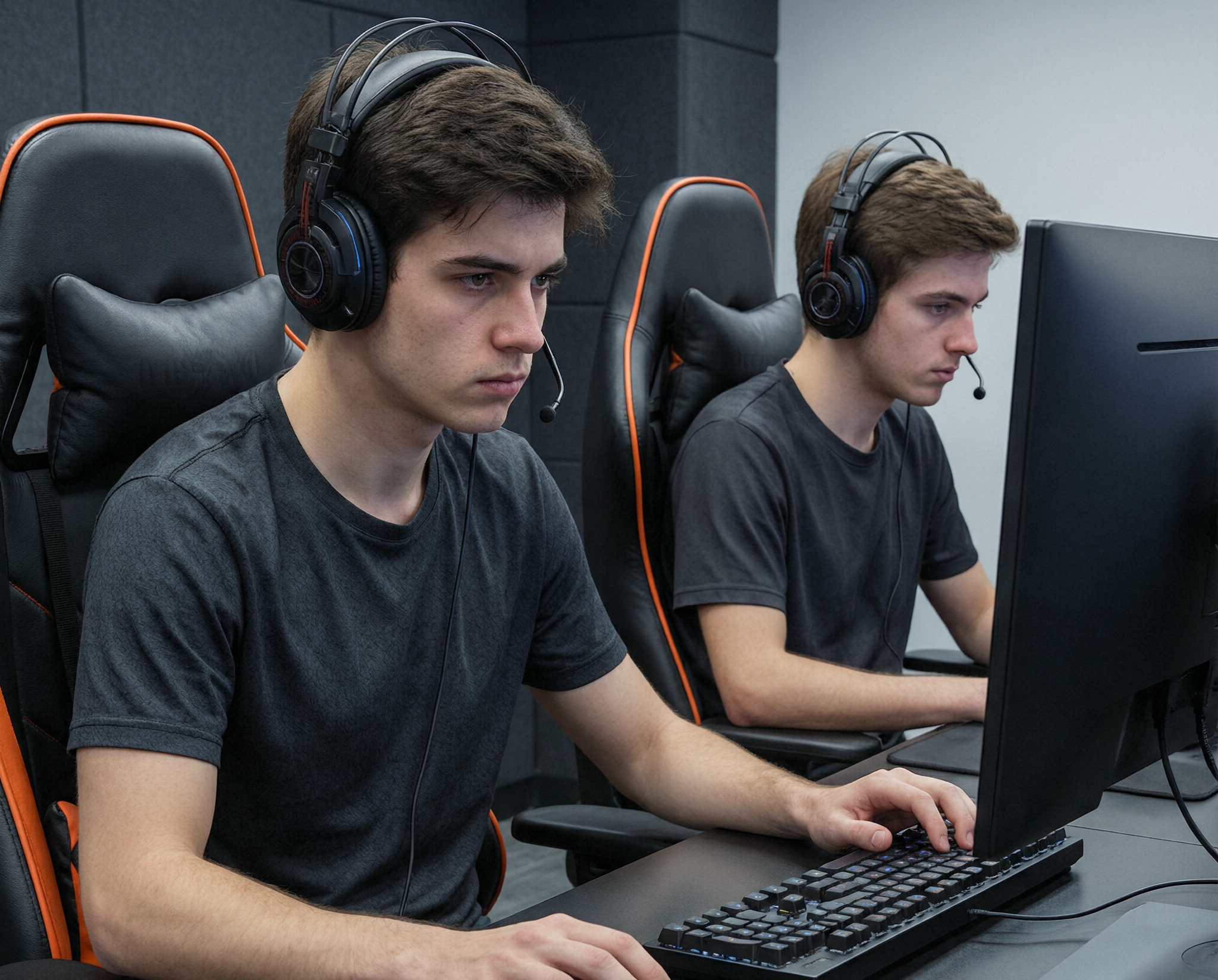
Esports academies are adopting stress scales, tilt assessments, and resilience interventions to build mentally tough players. Here's what the science says actually works.
The scene is familiar across countless esports training facilities. A 16-year-old prodigy with lightning-fast reflexes sits slumped in his chair after a crushing loss. His hands are shaking. His comms are silent. The raw talent is there, but the psychological foundation is crumbling.
This isn't a failure of skill. It's a failure of resilience. And it's exactly what modern esports youth academies are trying to fix through systematic mental toughness training.
The Pressure Problem in Competitive Gaming
Esports players face extraordinary psychological demands. They train for 35 hours or more per week, often under intense scrutiny from coaches, teammates, and online audiences. The cognitive load is immense – processing split-second decisions while managing communication, strategy, and physical execution.
One emerging concept in esports psychology research is "tilt" – a state of frustration escalating into anger that results in diminished performance, attention, and recurring negative thoughts about errors. According to a 2024 study that developed the Tilt Scale, this psychological state typically persists for around 30 minutes after stressful situations. For a player in the middle of a tournament, 30 minutes of compromised performance can end a career.
The research also highlights a critical insight: mental toughness is directly associated with perceived control and the selection of more problem-focused coping strategies. Players with higher mental toughness scores tend to avoid avoidance coping and engage more effectively with stressful situations.
Measuring What Matters: Resilience Assessment Tools
Before you can train resilience, you need to measure it. Modern esports academies are adopting several validated assessment tools.
The Tilt Scale offers a structured way to quantify a player's vulnerability to performance-debilitating frustration. Its 18 items fall into two factors: Causes and Consequences of tilt, with strong internal consistency. This allows coaches to identify which players are most at risk of tilting under pressure.
Mental Toughness Questionnaires – particularly the MTQ6 and Mental Toughness Index – are being adapted for esports contexts. Research shows these frameworks are associated with how players appraise stress and which coping strategies they select. The two questionnaires measure different aspects of mental toughness, suggesting that a comprehensive resilience program needs to address multiple psychological dimensions.
Stress and coping assessment involves evaluating how players appraise high-pressure situations – whether they interpret them as threats or challenges. This appraisal process significantly influences performance outcomes.
Biomarker monitoring is also emerging. Studies measuring cortisol, testosterone, and C-reactive protein levels in professional esports players are helping quantify the physiological toll of competitive gaming. These objective measures provide early warning signals for burnout and chronic stress.
Intervention Approaches: What Actually Works
Academies are deploying several types of interventions to build mental resilience.
Mindset Reappraisal Training
Research on reappraisal interventions shows promise for helping players reinterpret stressful situations as challenges rather than threats. One study found that a single-session arousal reappraisal intervention reduced cognitive and somatic anxiety while increasing "quiet eye" durations – a measure of focused attention under pressure. A preliminary study of a Mindset-Reappraisal intervention demonstrated enhancements in esports performance, including faster completion times and higher shooting accuracy.
However, not all interventions succeed. A 2024 study that adapted a synergistic mindsets intervention to esports found that participants didn't actually experience negative affect during competition, limiting the capacity for the intervention to show effects. This highlights the importance of tailoring interventions to specific competitive contexts.
Biofeedback and Stress Management
Some academies are adopting technologies that monitor physiological responses during training. Systems that track heart rate, brain activity, and other biomarkers can trigger immediate interventions when stress levels spike – such as guided breathing exercises or training difficulty adjustments.
Structured Mental Skills Training
The "trifecta of esports health" approach encompasses mind, body, and relationships. On the mental side, this includes sleep management, mood regulation, and mental preparation techniques. The Botvin LifeSkills curriculum, adapted for esports contexts, teaches stress management, decision-making, and refusal skills – all directly applicable to the pressures of competitive gaming.
YMCA's Y Esports programme demonstrates how structured esports training can build resilience alongside life skills. Young participants develop emotional regulation, leadership, and teamwork – not as add-ons, but integrated into the competitive experience.
Professional Support Integration
Leading academies now embed sports psychologists directly into training programmes. Team Spirit's youth system, which has successfully compressed elite player development cycles to two years, includes dedicated mental coaches to help players manage their mental state and prevent burnout. This professional support is considered as essential as tactical coaching.
What This Means for Academy Design
The emerging evidence suggests that mental resilience training in esports academies should follow several principles:
Assess before training. Use validated scales to measure tilt vulnerability, mental toughness, and stress appraisal tendencies.
Intervene early. Resilience training should begin at the youth level, not when players reach professional competition.
Integrate with performance training. Psychological skills should be trained alongside mechanical skills, not as separate add-ons.
Monitor outcomes. Use both subjective assessments and objective biomarkers to track progress.
Tailor approaches. Individual players may require different intervention strategies based on their specific psychological profiles.
The Bottom Line
Mental resilience training in esports youth academies is moving from experimental to essential. The research is clear: psychological factors are at least as important as mechanical skill in determining competitive outcomes. When players can manage stress, avoid tilt, and maintain composure under pressure, their raw talent can actually translate into consistent performance.
The academies that invest in comprehensive resilience training aren't just building better players. They're building players who can actually sustain their careers, manage the pressures of professional competition, and perform when it matters most. And in the hyper-competitive world of esports, that's the difference between a promising talent and a champion.