
Cyberpunk Body Modification and the Narrative Conflict of Human Identity
When you can replace every limb, every organ, and every memory, what remains of the person you used to be? From Ghost in the Shell to Cyberpunk: Edgerunners, here's how the genre tackles the defining philosophical struggle of our age.
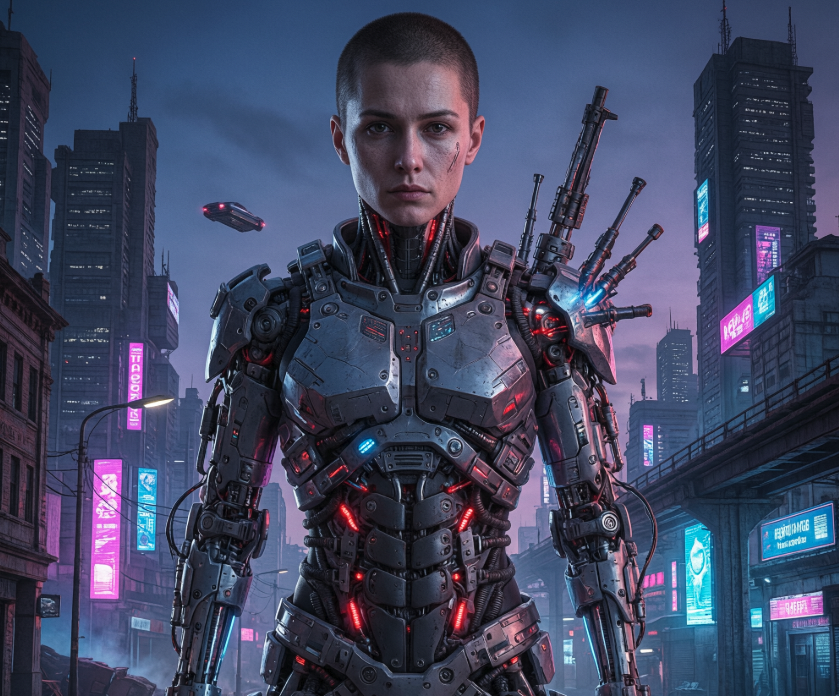
In cyberpunk, the body is raw material — upgradeable, replaceable, discardable. From Ghost in the Shell to Edgerunners, the genre asks: when everything can be modified, what's left that's truly you?
In the neon-drenched alleyways of cyberpunk imagination, the human body is no longer a fixed biological entity. It is a raw material, waiting for the surgeon's scalpel and the technician's code. The genre has spent decades exploring a deeply unsettling question: when you can replace every limb, every organ, and eventually every memory, what remains of the person you used to be?
This is not a hypothetical scenario. As technology edges closer to the visions of Gibson, Shirow, and Pondsmith, the narrative conflict at the heart of cyberpunk feels increasingly urgent. The tension between what we are and what we choose to become through body modification is, in many ways, the defining philosophical struggle of our age.
The Ghost and the Shell: When the Body Becomes a Question Mark
The most iconic exploration of this crisis comes from Ghost in the Shell. Major Motoko Kusanagi is a full-body cyborg; only her brain, or "ghost," remains biological. However, even this ghost is suspect. In a world where memories can be hacked and personalities can be digitally reconstructed, what guarantees continuity as a person?
When a person's sense of self is built on sensory experience and memory, and both can be artificially manufactured, the foundation of their identity collapses. The film presents a powerful confrontation between two beings who have reached opposite ends of the same path. The Puppet Master is an AI that has evolved consciousness in the digital realm and seeks to experience mortality and reproduction. Kusanagi is a human whose body is almost entirely machine, and she seeks proof that she still possesses a soul despite her cybernetic body. The line between humans and machines dissolves when both converge on the same existential question.
The Body as a Prison: Gibson's "Meat"
William Gibson, the genre's godfather, offered a grimmer perspective. In Neuromancer, the protagonist, Case, views his physical form with contempt. It is "so much meat" – a collection of flesh he must endure between visits to cyberspace, where he feels truly alive. His consciousness is elsewhere, and his body is merely a container for it.
Critical scholarship argues that Gibson's work affirms embodiment as much as it glorifies disembodiment. The entire plot forces Case to confront the fact that his digital existence is inseparable from his physical one. He cannot escape the flesh; he must ultimately reconcile with it.
This dichotomy between the "embodied" and "disembodied" self has become a central trope in the genre. When the self can be projected into virtual spaces and stored in data banks, what does it mean to inhabit a vulnerable and decaying body? Gibson suggests that the body always matters, whether we want it to or not. Cyberspace may allow us to escape, but it never lets us leave ourselves behind in the real world.
The Digital Self and the Fragmentation of Identity
The cyberpunk vision of body modification extends beyond the physical realm into the realm of identity. In a world where the traditional boundaries between self and other and between human and machine are increasingly porous, the question of who we are in cyberspace becomes impossible to answer with traditional notions of a unified self.
The issue is not just what you replace, but what you become. Characters who install military-grade combat implants do not just improve their reflexes; they adopt the mental patterns of warfare. Those who jack into corporate networks do not just access data; they absorb the logic of power. The body becomes the site of perpetual negotiation between the person you were and the system into which you are being assimilated.
The Cultural Specificity of the Crisis
Interestingly, this narrative conflict takes a particular form in East Asian cyberpunk. In Cyberpunk: Edgerunners, protagonist David's relentless pursuit of stronger chrome is framed not just as ambition but as a systemic pressure to upgrade or be crushed by a system that demands constant self-improvement.
David believes he is special, that his high tolerance for cyberware makes him exceptional. However, the system has engineered this belief into reality. The military-industrial complex constructs an infinite treadmill: to defeat stronger enemies, you need stronger chrome; to afford stronger chrome, you need to take on more dangerous missions; each success only raises the stakes of the missions. David's tragedy is not that he fails – it is that he succeeds exactly as the system intended until his body, and his mind, collapse.
The symbolic journey to the moon – Lucy's dream that becomes David's obsession – is read by some as a form of obsession where love becomes another driver of the very consumption that destroys him. Ultimately, David ignores Lucy's repeated pleas for him to stop and continues to install more and more powerful Chrome. The system has co-opted even his love, turning it into a justification for further self-destructive behaviors.
Identity Without a Body: The Posthuman Question
Ultimately, the cyberpunk narrative conflict around body modification pushes toward a deeper philosophical frontier: can identity exist without a biological substrate?
Ghost in the Shell cautiously addresses this question. By the film's conclusion, Kusanagi's body is destroyed, but her consciousness merges with the Puppet Master and is dissolved into a vast network. She transcends not just her original body, but the very category of "human."
This is the final narrative pivot: What does it mean to modify one's body? What does it mean to no longer need one? For some characters, this is liberating. For others, it is a terrifying loss of autonomy and independence.
The Limits of the Question
However, the cyberpunk answer is never entirely satisfying. One critique of the genre notes that despite all its technological speculation, it often reinstalls very old, religious binaries: spirit versus flesh, soul versus machine, transcendence versus corruption. The tension between embodiment and disembodiment tends to reaffirm traditional religious concepts of human reproduction, individual consciousness, spirit, and body. The "post-human" is often just a new guise for the old soul.
This is the tension that the best cyberpunk works never fully resolve, and that is precisely their point: the identity crisis created by body modification is not a problem to be solved but a condition to be lived. In the cyberpunk world, one cannot become a cyborg without asking oneself who one is. You cannot ask who you are without confronting the possibility that your answer might change tomorrow.
The Bottom Line
Body modification in cyberpunk is never just about shiny new limbs or faster reflexes. It is a narrative device that forces characters – and readers – to confront the foundations of human identity. When the body is a product to be upgraded, memory is data to be managed, and consciousness is code to be run, what exactly is left that is truly you?
The genre's answer, across its many variations, is that there is no single answer. In a posthuman world, identity is not a fixed possession; it is a continuous performance, a negotiation between what you were and what you are becoming. The act of modification is not just a decision to change your body; it is the beginning of a lifelong question about who you are willing to become.